Machines that are unfinished until you arrive.
ForReal is the collaborative practice of Zvika Markfeld and Saron Paz — participatory installations, public interventions and collective instruments that only become the work when a stranger decides to take part.
We build machines that are incomplete by design. Each one waits — sometimes for a gesture, sometimes for a word, sometimes for a personal object to be surrendered — and only becomes the work when a stranger decides to take part.
Our material is not the motor, the laser or the line of code, though we build all of them by hand. Our material is the moment of participation: the hesitation before a passer-by texts seven letters onto a city billboard, the small grief of feeding a keepsake to a wrecking ball, the uncanny recognition of facing an army of robots that move as you move.
We borrow freely from the games, rituals and tools of everyday life — Pong and Space Invaders, the Rube Goldberg contraption, the vending machine, the lighthouse, Pollock's drip — and re-stage them as public experiences that put the body back into an increasingly screen-bound culture. The technology is never the subject. The subject is what people do with each other once the machine gives them permission.
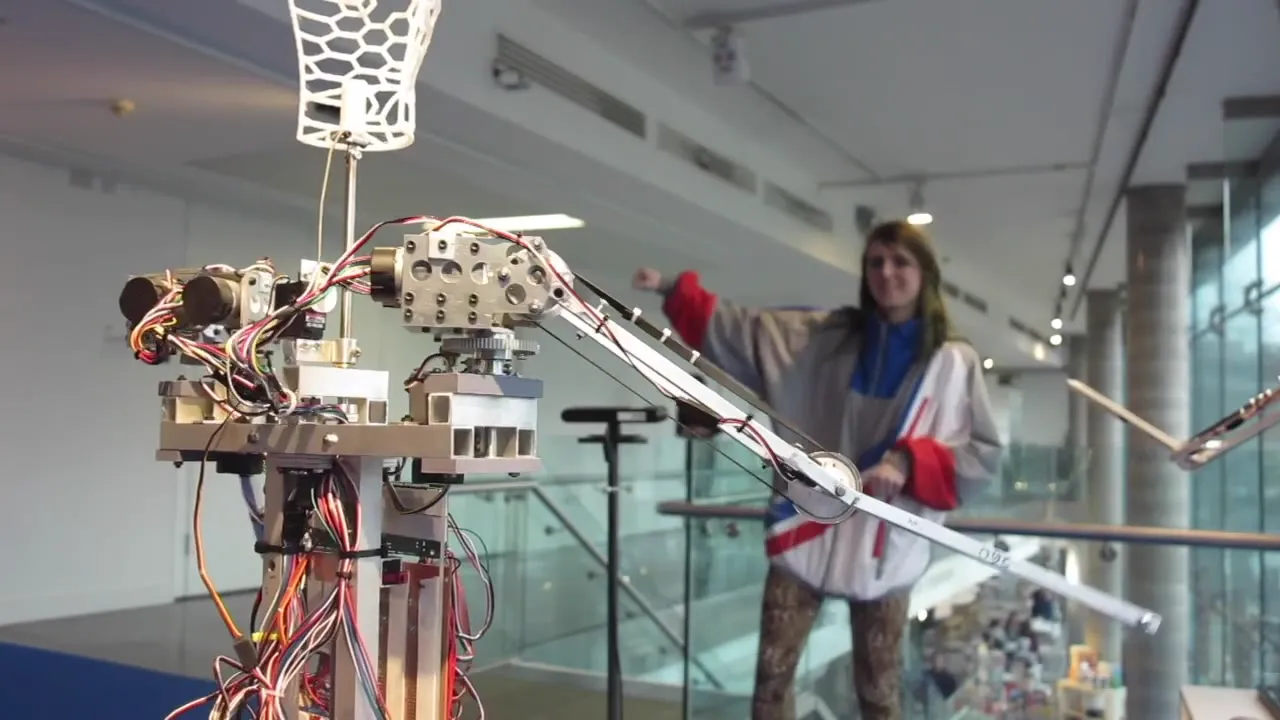
DoppelGängerArmy of One, 2017
The work
- Title
- DoppelGänger — Army of One
- Year
- 2017
- Medium
- Interactive kinetic installation
- Materials
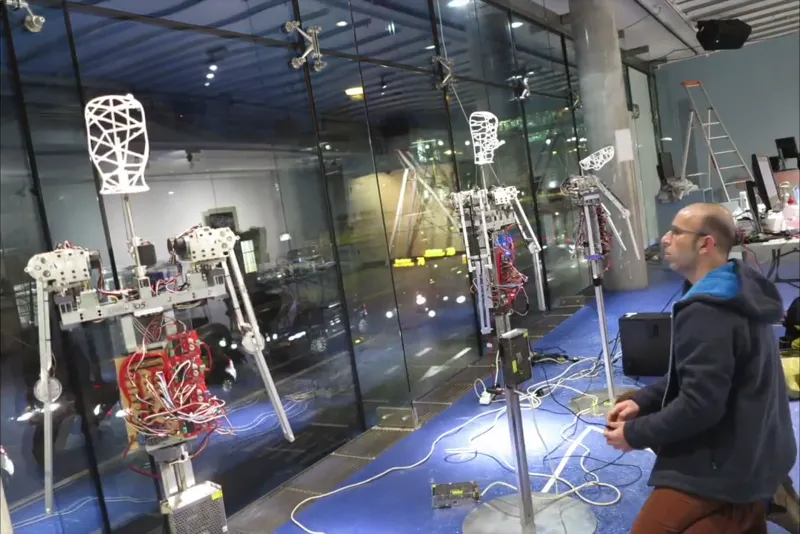
- Servo-driven skeletal robots — aluminium limbs, lattice heads, exposed wiring — on steel stands; camera-based body tracking
- Dimensions
- Each figure approx. human height; ensemble dimensions variable
- Tools
- Custom motion-tracking and behaviour software; custom robotics
- Context
- Commissioned by Science Gallery Dublin for the exhibition HUMANS NEED NOT APPLY, 2017. An earlier version was submitted to Google's DevArt programme.
- Catalogue
- FR·015 · Mirrors
Concept
DoppelGänger is an exploration of the dynamic link between virtual and physical identity, staged through kinetic interaction between a person and a group of robots. A single member of the audience steps in front of their own mirroring mini-mob and begins to discover their many faces: every robot follows the visitor's movement, but each one manifests a different behavioural pattern — eager, hesitant, contrary, late — as though a single personality had been split into variations of itself.
Playing with the ensemble, the visitor tests the identity, abilities and limits of each robot as an individual and of the group as a whole. What begins as a game of mirroring becomes a feedback loop in which human and robot, physical and virtual, preconditioned and spontaneous, perform together in chaotic harmony.
The story
The idea came from a simple observation about life online: the digital sphere has stretched the borders of identity. Each of us now maintains several selves at once — profiles, avatars, voices tuned to different audiences — and each of them behaves a little differently from the body that animates it. We wanted to make that multiplicity physical, to let someone stand in a room and literally face their own crowd.
In 2017 Science Gallery Dublin invited DoppelGänger into HUMANS NEED NOT APPLY, an exhibition about automation and the future of human work. Installing the ensemble in Dublin turned the question around: in a show about machines replacing people, here was a group of machines that could do nothing at all without a person — an army of one.
Read the full entry →All works, by chapter
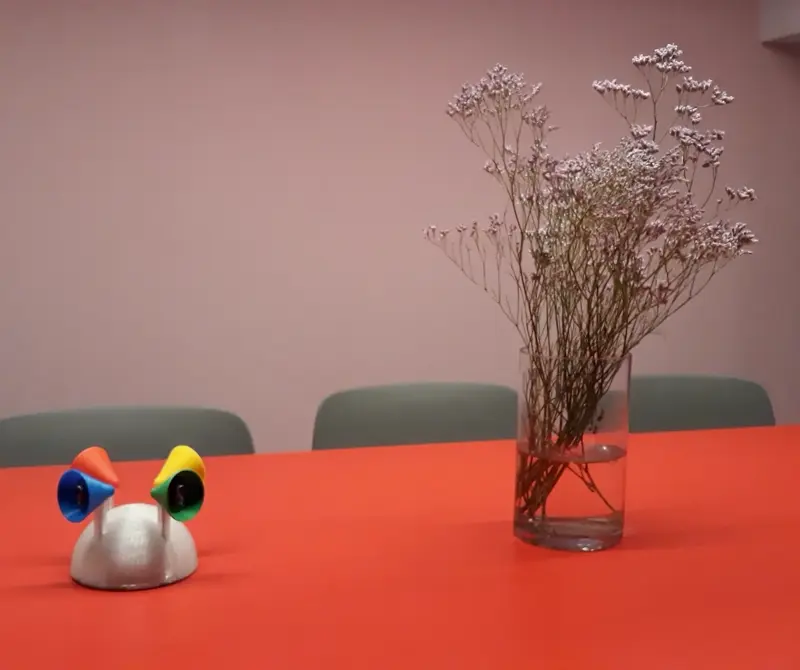 FR·019KeyNoteInteractive object and data visualisationVII. Institutions2021
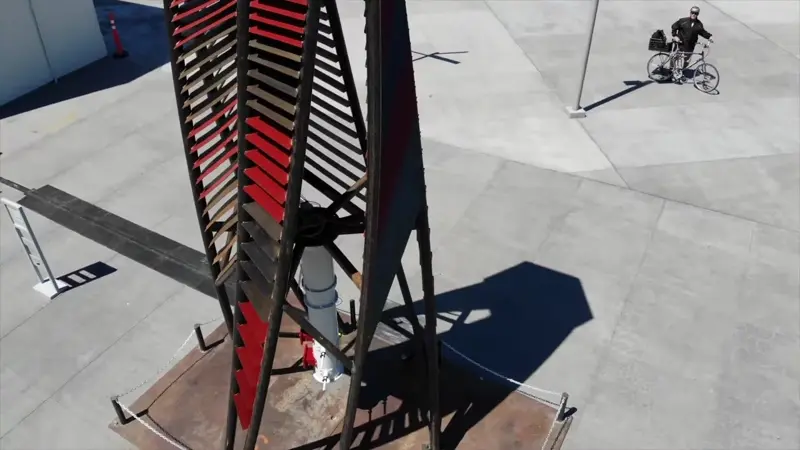 FR·018PointOfViewNetworked public sculptureII. Commons2018
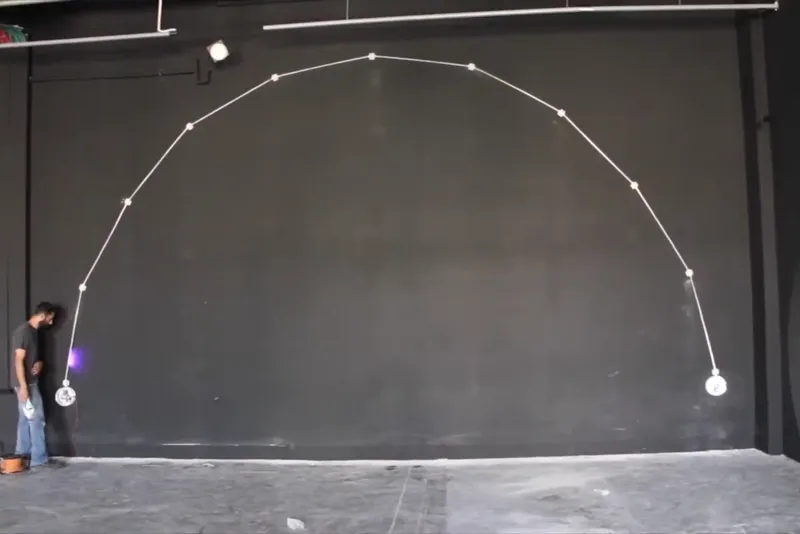
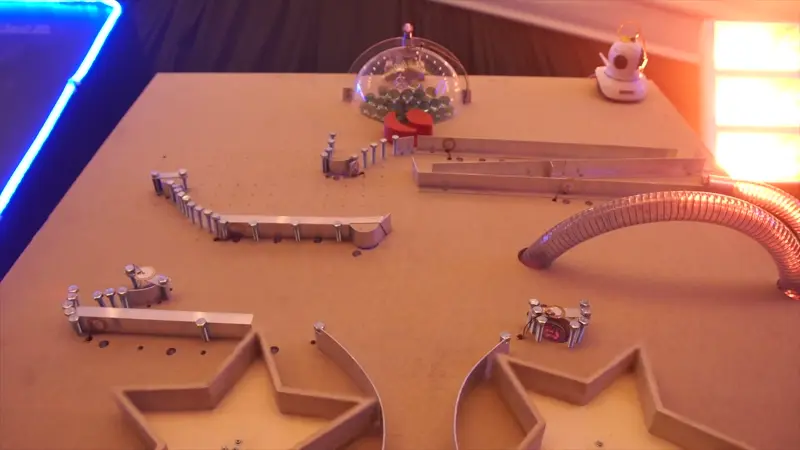 FR·017Cause&EffectKinetic sculpture (Rube Goldberg machines)VI. Useless Machines2018
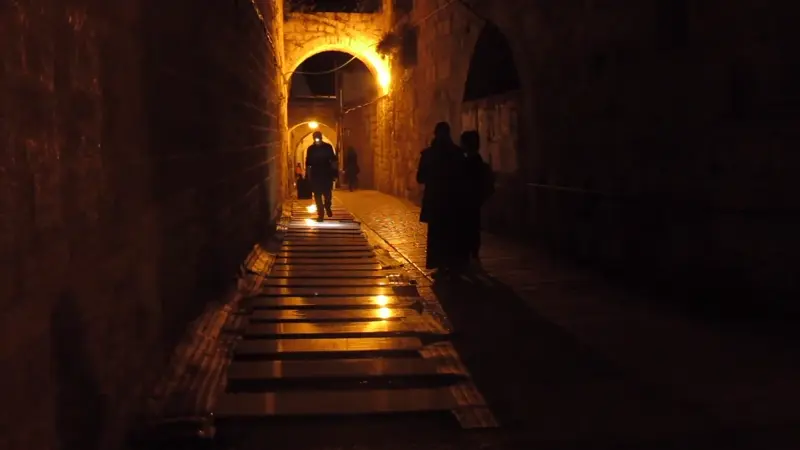 FR·016TipToneInteractive sound pathIII. Instruments2017
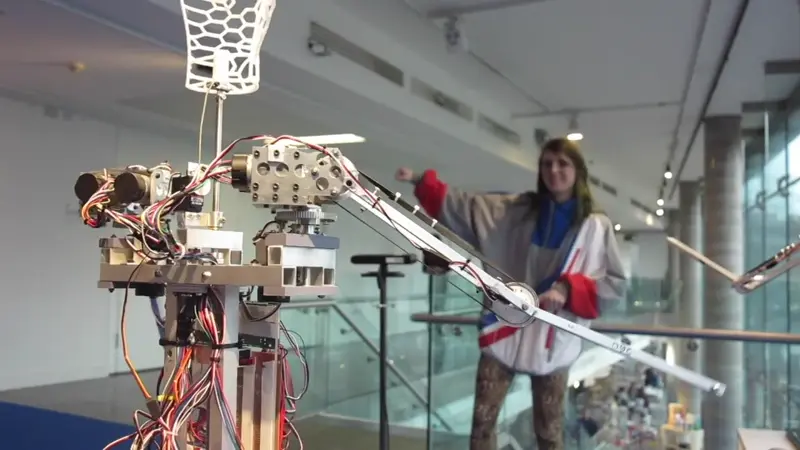 FR·015DoppelGängerInteractive kinetic installationI. Mirrors2017
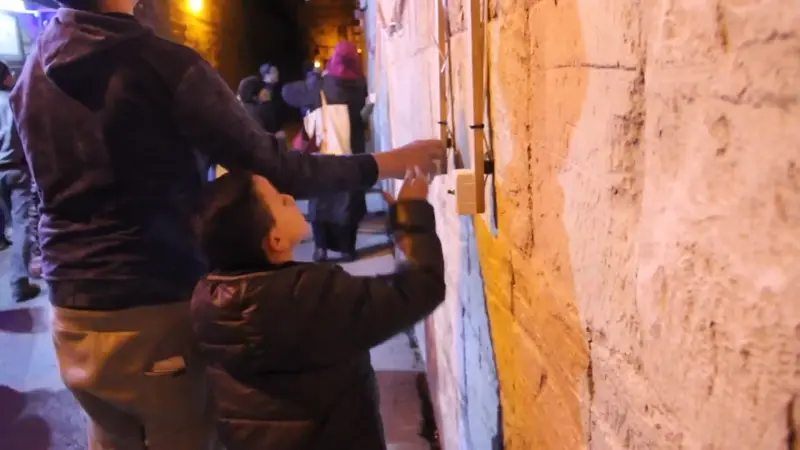 FR·014BoomShackSocial percussion installationIII. Instruments2017
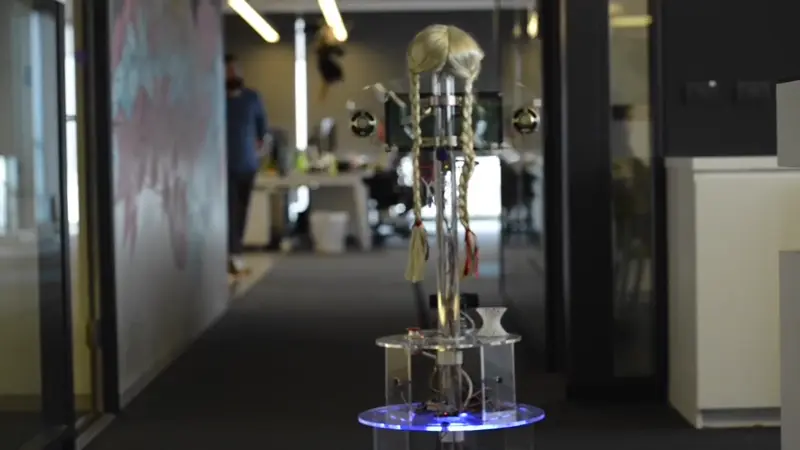 FR·013BackOfficeOpen lab and robotic intervention in a workplaceVII. Institutions2017
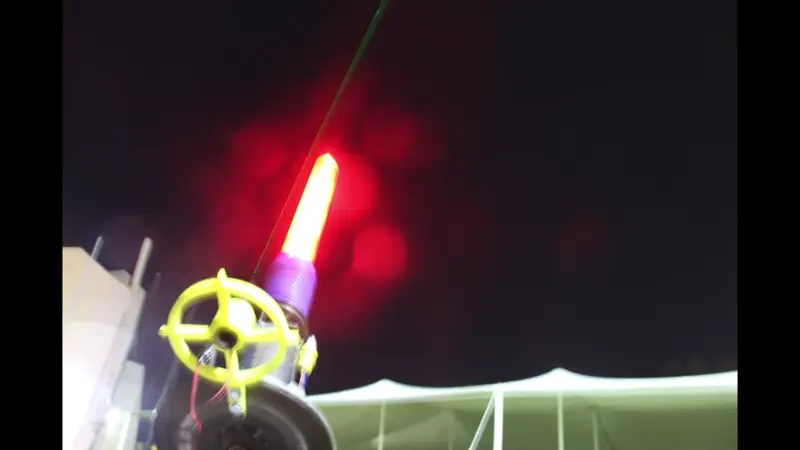 FR·012SpacedOutLive performance installationV. Games2016
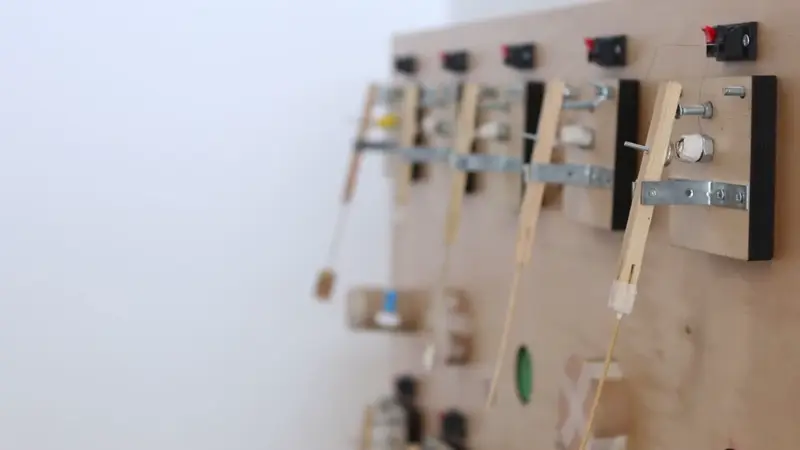 FR·011BoomBoxAccumulative musical instrument and workshopIII. Instruments2015
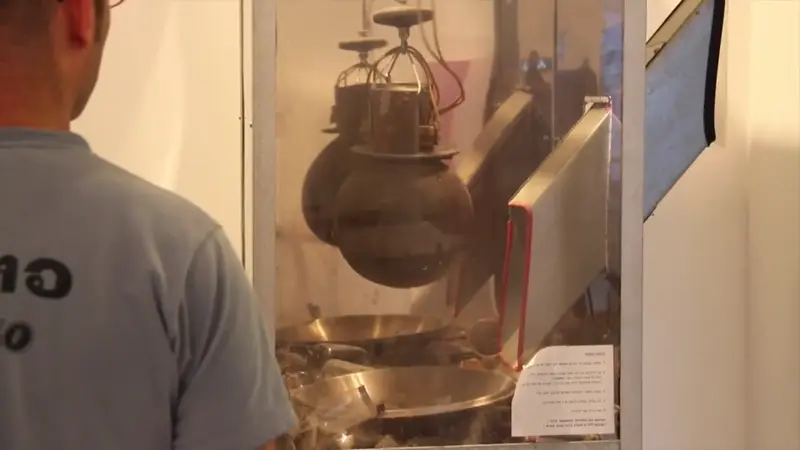 FR·010DeusExMachinaParticipatory kinetic installationVI. Useless Machines2014
 FR·009CommonSenseCrowd-sourced generative installationII. Commons2014
 FR·008BitWeenInteractive installation series, permanent collectionV. Games2014 — 2016
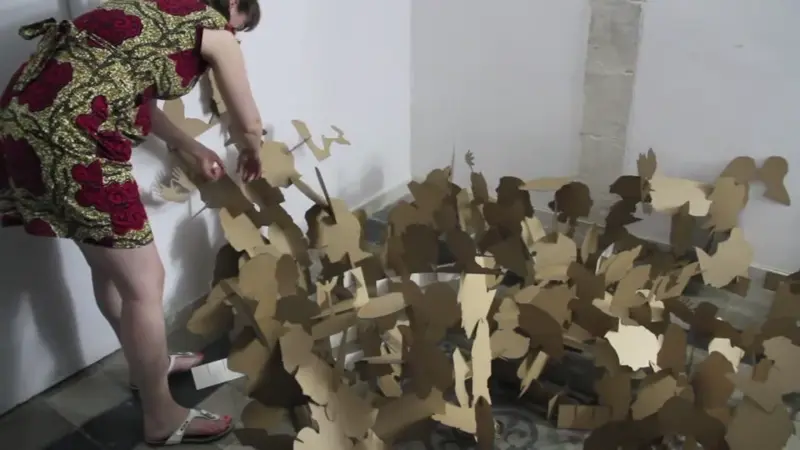 FR·007SolidSilhouetteParticipatory sculpture, made liveI. Mirrors2013
 FR·006LetraSetSMS-responsive public light installationII. Commons2013
 FR·005BrainMattersCurated exhibition and production platformI. Mirrors2013
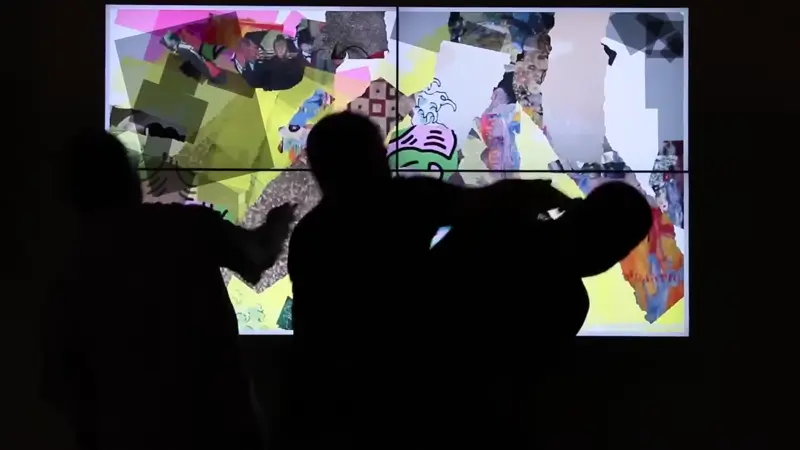 FR·004ActionPainterInteractive painting installation and mobile applicationIV. Gestures2013
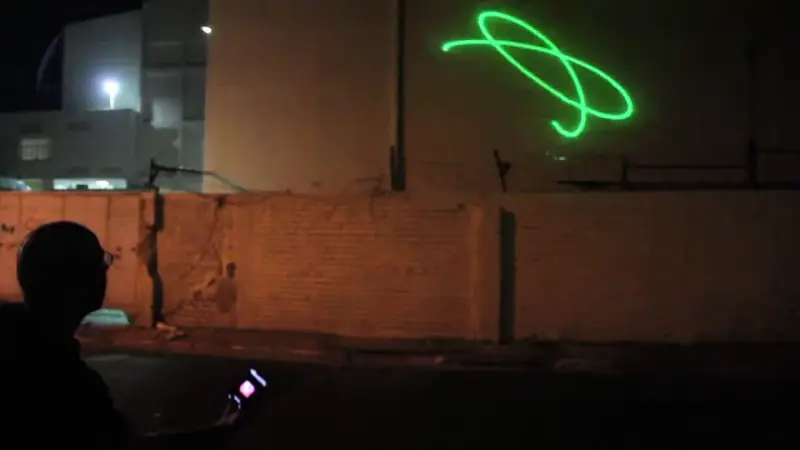 FR·003ActionLaserInteractive light drawingIV. Gestures2013
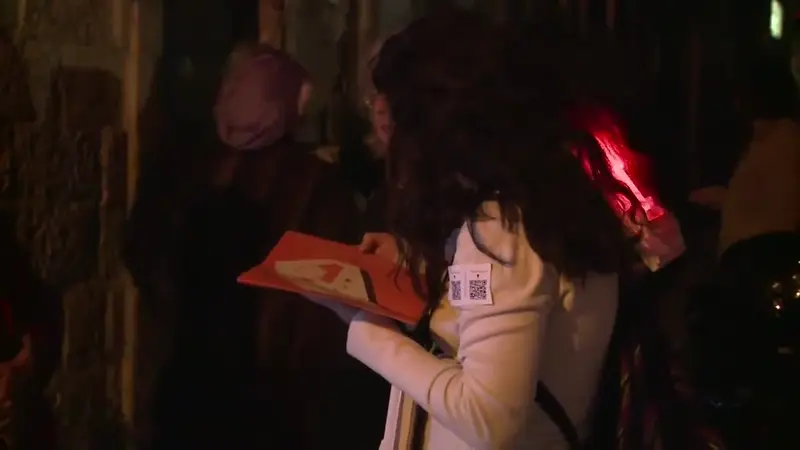 FR·002SiteSpecificLocative interventions across a neighbourhoodII. Commons2012
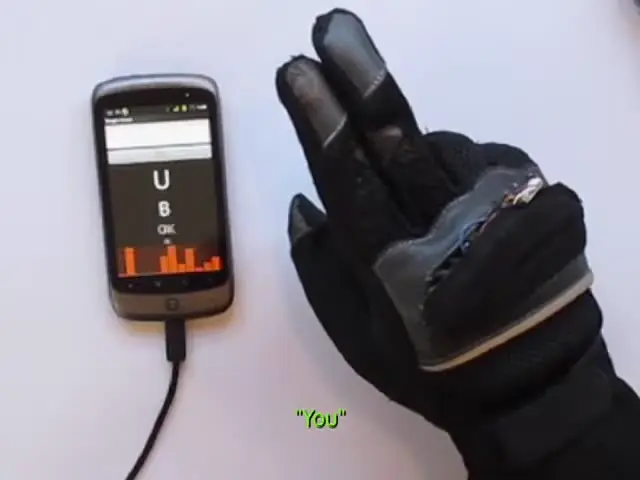 FR·001Show&TellWearable interface; performative objectIV. Gestures2011 — 2012
From the studio floor

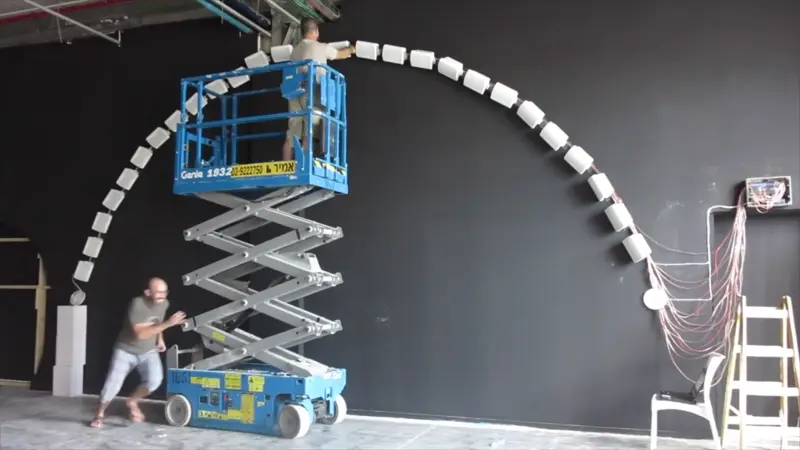
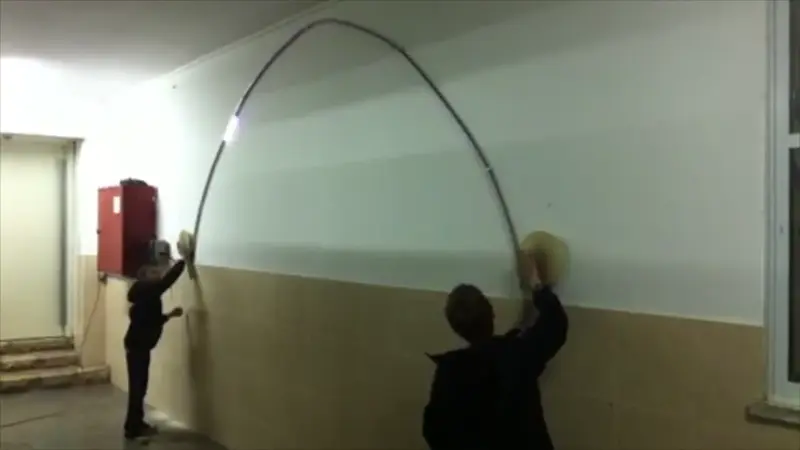
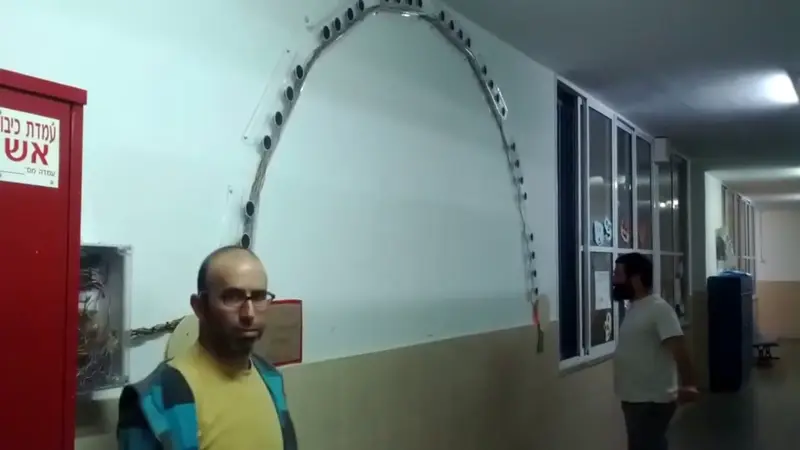
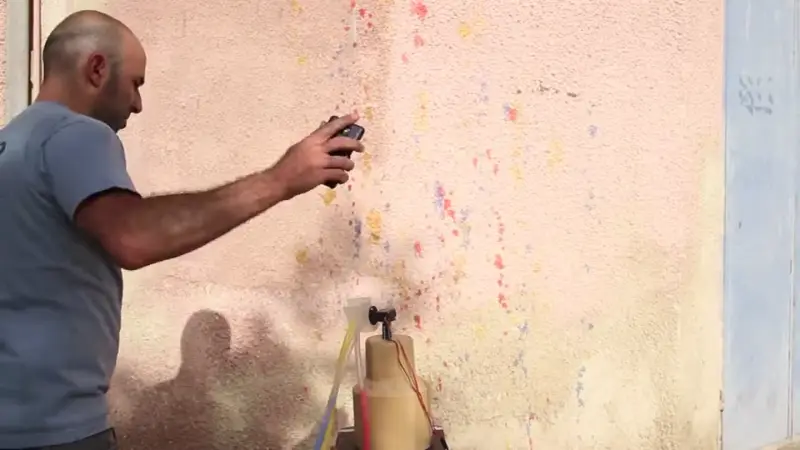
ForReal is the collaborative practice of Zvika Markfeld and Saron Paz, based in South Tel Aviv. Since 2011 the duo has produced participatory installations, kinetic sculptures, public-space interventions and collective instruments that exist only in the moment an audience completes them. Their work has been commissioned and shown by Science Gallery Dublin, MadaTech — the Israel National Museum of Science, Technology and Space (where BitWeen is on permanent display), the Bloomfield Science Museum Jerusalem, Hansen House Centre for Design, Media and Technology, the Benyamini Contemporary Ceramics Centre, Fresh Paint Art Fair, the MusraraMix Festival and the Sounds of the Old City Festival in Jerusalem, and at Google events in London, New York and Seoul.
Zvika Markfeld is a maker, robotics engineer and self-described coding poet working at the intersection of physical computing, robotics and interactive art. Saron Paz is a new-media artist, experience designer and curator whose practice sits at the meeting point of technology, material and public space, turning passers-by into participants and animating everyday objects until they seem to feel.